
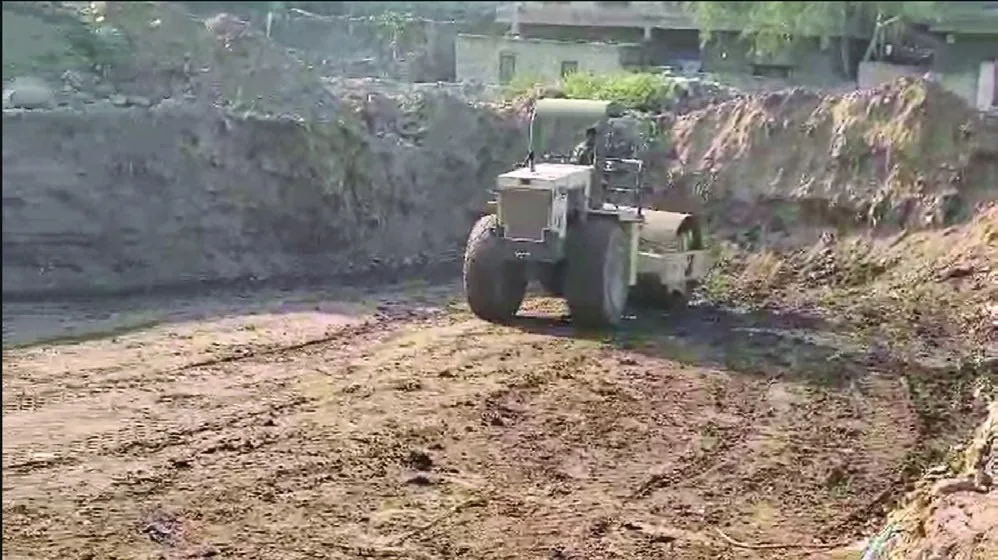
Yemen's geography is defined by towering mountain terrain and steep gradients that make road construction both a critically important and an extremely difficult development artery. Ensuring road sustainability in these harsh environments requires advanced engineering standards beyond conventional methods, capable of withstanding heavy rainy seasons and mountain washouts.
1. Topographic Surveying and Choosing a Safe Alignment
Work begins with precise surveying studies to determine the most suitable engineering gradients for the alignment and to avoid geological faults and active rockslide zones.
Using specialized heavy machinery for excavation and controlled rock blasting ensures opening paths without affecting the cohesion of surrounding mountain masses.
2. Hydrology: Rainwater and Flood Drainage Networks
Rainwater and rushing floods are the number one enemy of mountain roads in Yemen. That is why designing and building box and pipe culverts, side drainage ditches, and stone retaining walls is the essential foundation for preventing road-layer erosion.
Reinforcing slopes with steel mesh and shotcrete protects traffic from sudden rockfalls.
3. Quality Control of Base Layers and Laboratory Compaction
Every sector undergoes strict laboratory tests for compaction density (Proctor Test) and California Bearing Ratio (CBR) for sub-base and gravel base layers before hot asphalt is laid at thicknesses and standards that guarantee resistance to the axial loads of heavy trucks.
Bottom Line
Mountain road construction is an investment in communities' lives and development, and the quality of engineering execution is the real deciding factor between a road that lasts for decades and one that collapses with the first rainy season.
Need engineering consultation for your project?
Connect directly with the engineers and specialists at Al-Fada Al-Wasaa.